
 English (UK)
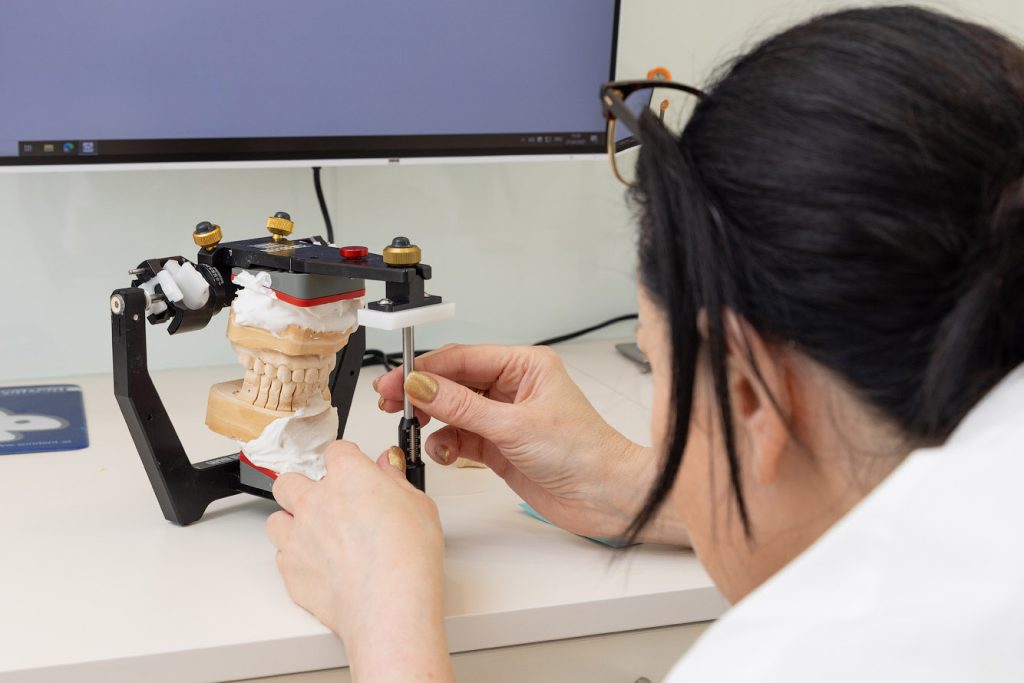
Introduction to the concept: functional dentistry, individual, whole-body – with a focus on occlusion, temporomandibular joint, posture and habits.
Relationship between occlusion, temporomandibular joint, muscles, posture and overall health – “form follows function”.
Holistic dentistry begins with an understanding of function. Prof. Rudolf Slavicek's method is a scientifically sound, functional diagnostic treatment concept that goes far beyond classical dentistry. It is a central component of the so-called Vienna School of Functional Dentistry – a globally leading approach to research into the temporomandibular joint, occlusion, and body posture.
Not only make teeth beautiful – but also integrate them functionally in the long term.
Because:
The masticatory system is part of a larger whole. If
If teeth, jaw joints, muscles and posture do not harmonize, this can have far-reaching consequences:
The Slavicek method is based on:
This is not about standardized solutions, but rather a plan that is based on the natural movements and needs of your masticatory system.
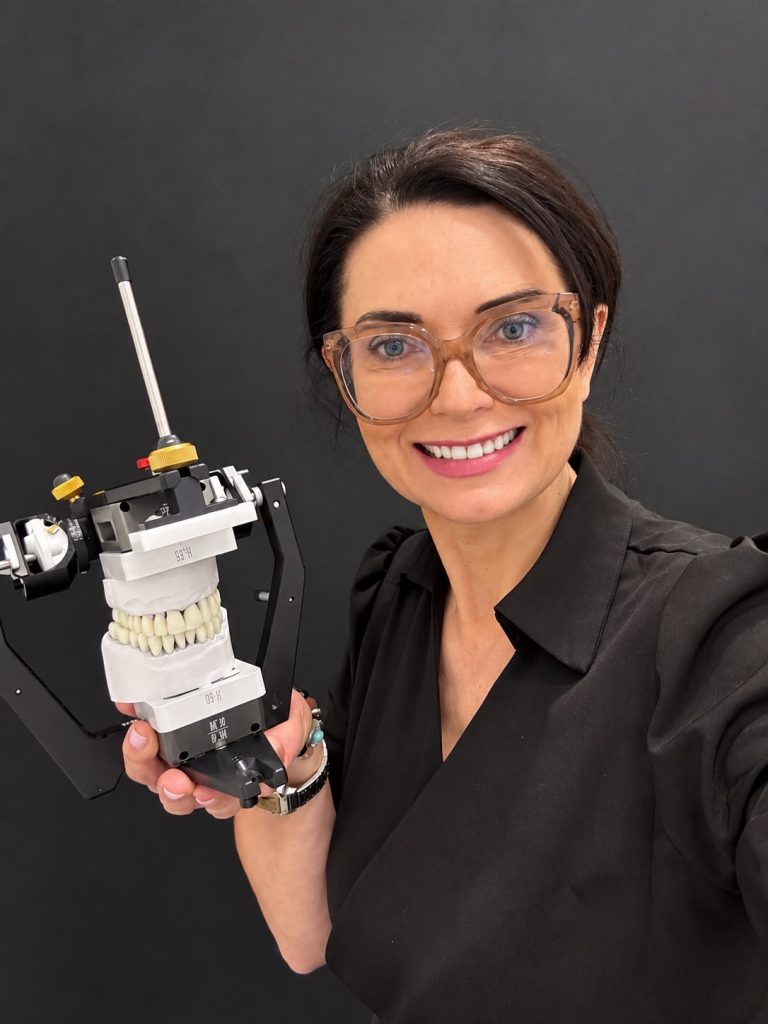
Relationship between occlusion, temporomandibular joint, muscles, posture and overall health – “form follows function”.
Why the bite doesn't just affect the teeth
A healthy bite is more than just aesthetics – it is part of your body’s statics.
In Slavicek's functional dentistry, we don't view the bite in isolation, but rather as a central control system in the body. Because how teeth meet not only influences chewing, but also:

The lower jaw is closely connected to the rest of the body via muscles, fascia, and nerves. A malocclusion, for example due to tooth migration, tooth loss, or previous dentures without functional diagnostics, can lead to uneven muscle tension and tension.
Typical complaints:
And: How does this affect the rest of the system?
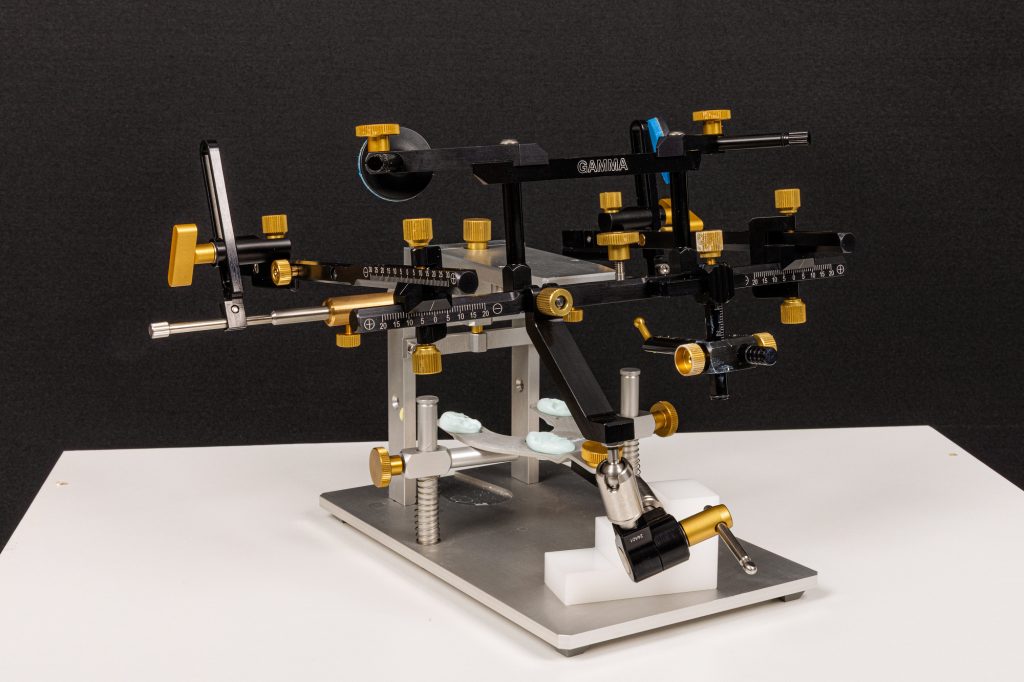
Before we treat, we use axiography, facebows and functional models to measure how your jaw moves – and whether it is in harmony with the rest of your body.
What is being investigated?
CMD screening, axiography, facebow, articulator, functional tests, habit analysis, body statics, and much more. Before treatment, it is important to understand how you "function." This is the central principle of Prof. Slavicek's method – and it begins with a thorough functional diagnosis.
In classical dentistry, the work is often static: tooth shape, contact, gap. The Viennese school according to Slavicek, on the other hand, asks:
The movement paths of the jaw joints are digitally recorded. This helps determine the individual joint position – without guesswork.
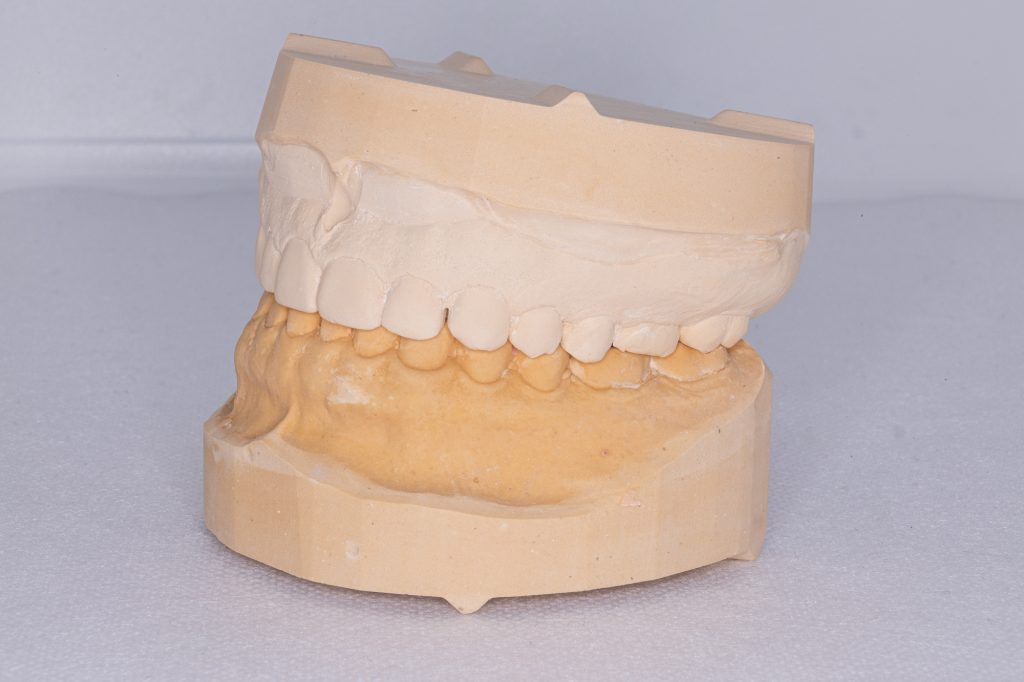
Detects the spatial position of the upper jaw to the skull – so that your bite is not in the plaster, but in the system
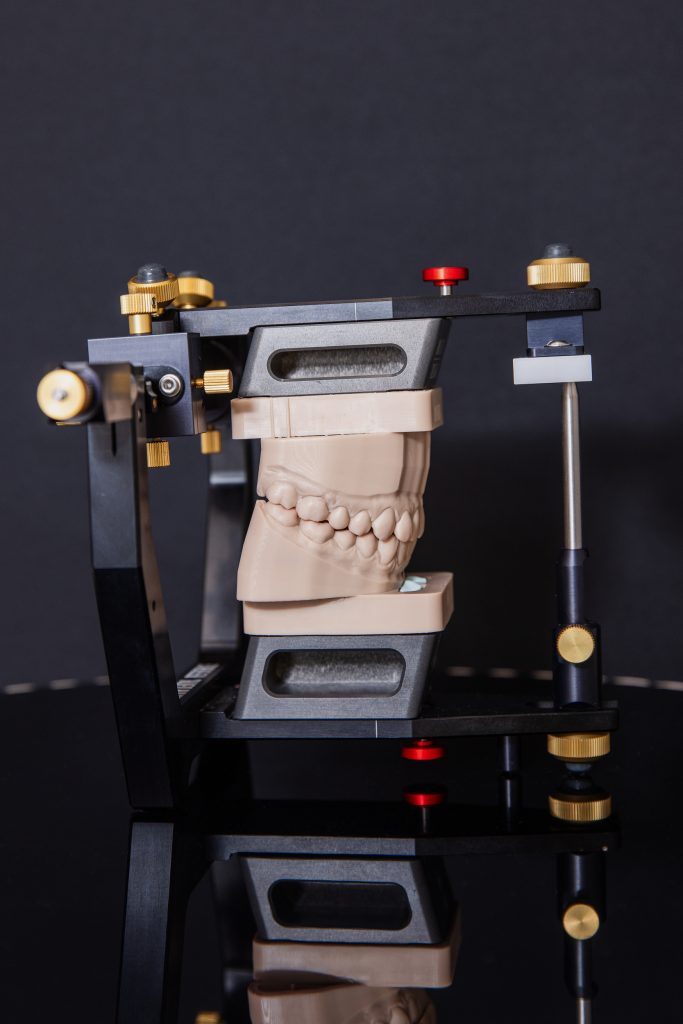
The jaw models are inserted into a functional diagnostic device (articulator) – which precisely simulates your jaw movements.
Examination for:
How do your tongue and lower jaw "park" when at rest? What is your body posture? What do you notice about your face? (Asymmetries, compensations)
Filling done, crown replaced, splint worn – and still discomfort? Many patients experience exactly that. Because: If the function isn't right, even the best reconstruction won't provide real relief.
In traditional dentistry, the thinking is usually “local”: A tooth is defective → so it is filled, crowned or replaced.
But what if the bite isn't right? If the teeth are beautiful, but the chewing system is overloaded?
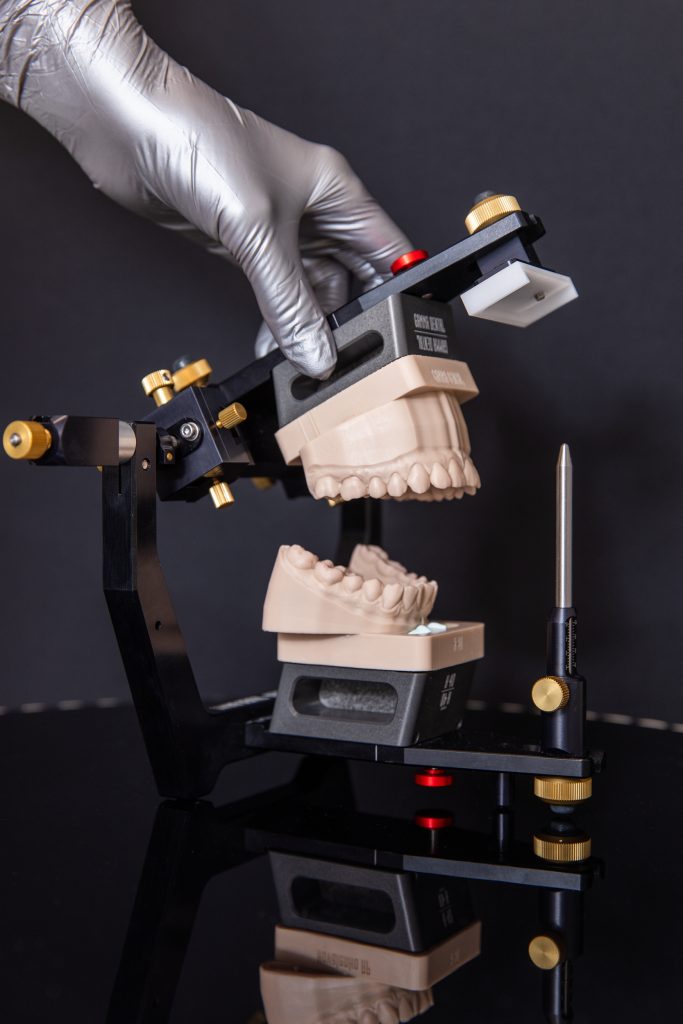
The Slavicek method begins before treatment – with a precise analysis of how your masticatory system functions. Only once the problem is clear does the actual therapy begin:
You can't successfully repair something that never worked functionally.
Functional dentistry thinks in terms of the system – not the individual tooth.
In the Slavicek method, successful treatment does not begin with the drill, but with a plan: the Individual Plan (IP) – structured, diagnostically sound planning that takes into account the individual functional status of your masticatory system.
The IP is not a blanket treatment plan, but a tailor-made therapy plan based on sound functional diagnostics – e.g.:
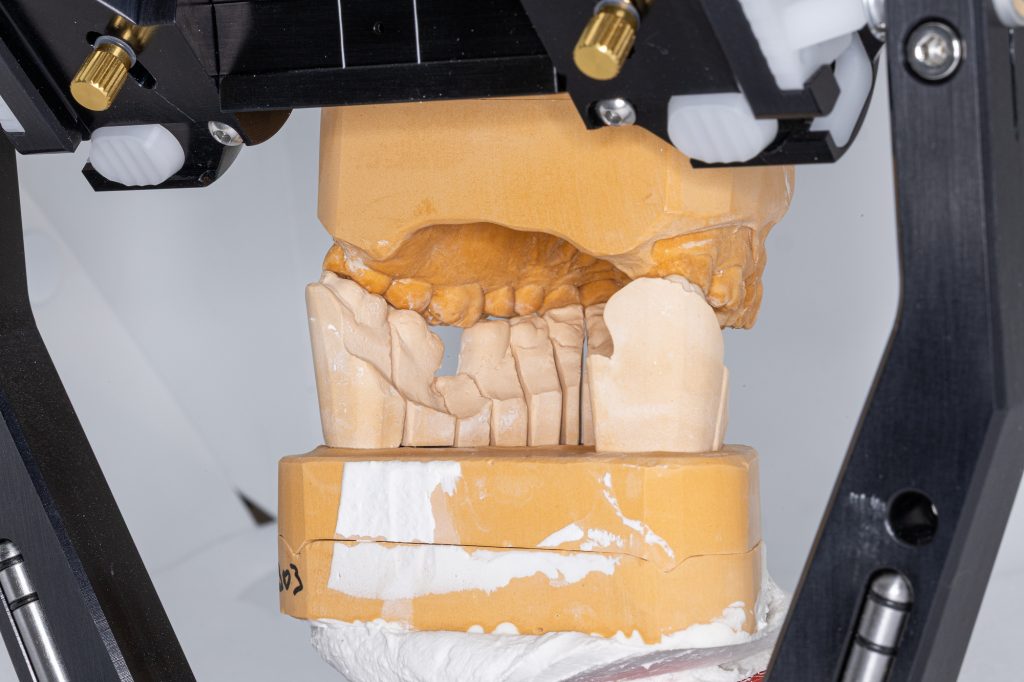
Only when this so-called therapeutic position has been established can all further measures be developed in a targeted and stable manner:
Without prior positioning, we risk
An IP is like an architectural blueprint for your masticatory system – without it, every treatment remains a makeshift patchwork.
In our practice we work according to the Slavicek concept:
Individual, functional, forward-looking. For results that last – and relieve stress.
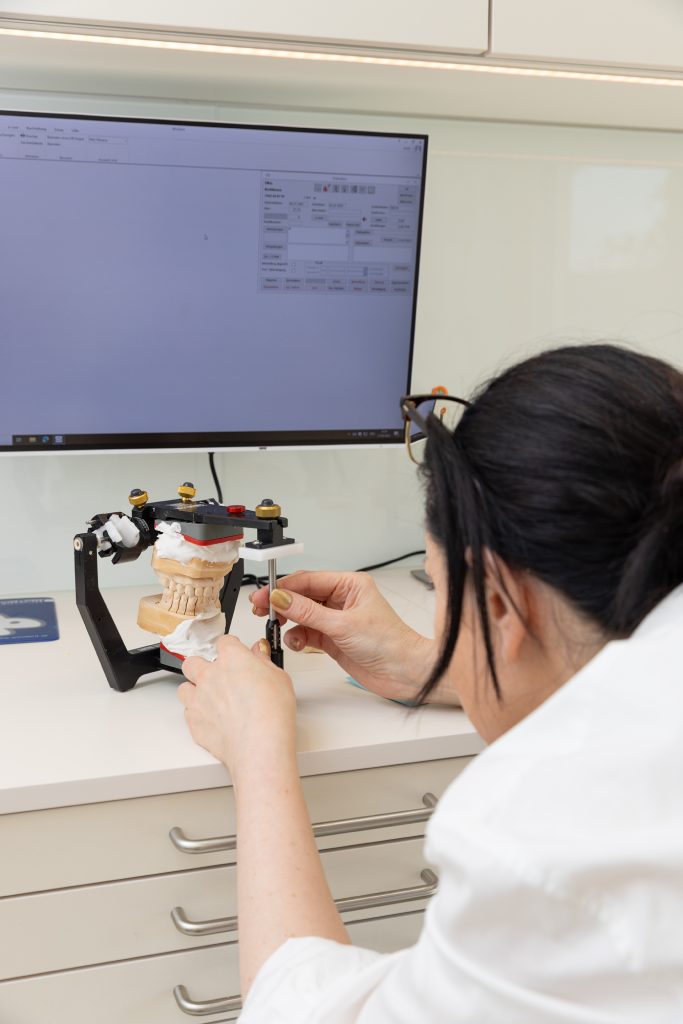
Not all pain comes on suddenly. Many problems in the masticatory system appear early – often unnoticed.
The Slavicek method starts right here:
Don’t wait until it hurts – recognize it before it happens.
A functioning chewing system is a sensitive balance between:
When this balance is disturbed, it is referred to as dysfunction – even without acute pain. Early warning signs include:
With targeted diagnostics and systemic observation we recognize:
Functional complaints are often not dental problems – but system problems.
Let’s take a look together – functionally, holistically and before it becomes chronic.
Craniomandibular dysfunctions (CMD) affect far more than just the jaw.
The Slavicek method understands the masticatory system as part of a complex functional network that is closely linked to posture, breathing, movement and even emotions.
That’s why it’s often not enough to “just adjust a splint” or “correct the bite” – we need to think and act together with other disciplines.
A blocked jaw joint can, for example, …
And vice versa:
– for myofascial relaxation, posture correction and mobilization
– swallowing patterns, tongue thrusting, speech development (especially in children)
– if posture, gait or statics are involved
– for tinnitus, chronic pain, stress management
Don’t treat symptoms – recognize connections.
The Slavicek method doesn't view dentistry in isolation, but rather as part of an overall medical concept. And that's exactly what it requires: exchange, openness, and teamwork.
CMD isn't just a "jaw problem." That's why we don't offer a standard prescription, but rather a customized, interdisciplinary treatment plan.
In classical dentistry, treatment is often symptom-oriented:
A tooth has a hole – so it is filled.
A jaw hurts – so there is a splint.
But:
What if the cause lies elsewhere?
What if the symptoms are a result of a functional imbalance?
This is exactly where Prof. Slavicek’s method comes in: Do not repair before the system is understood – but first analyze, then plan – and only then treat.
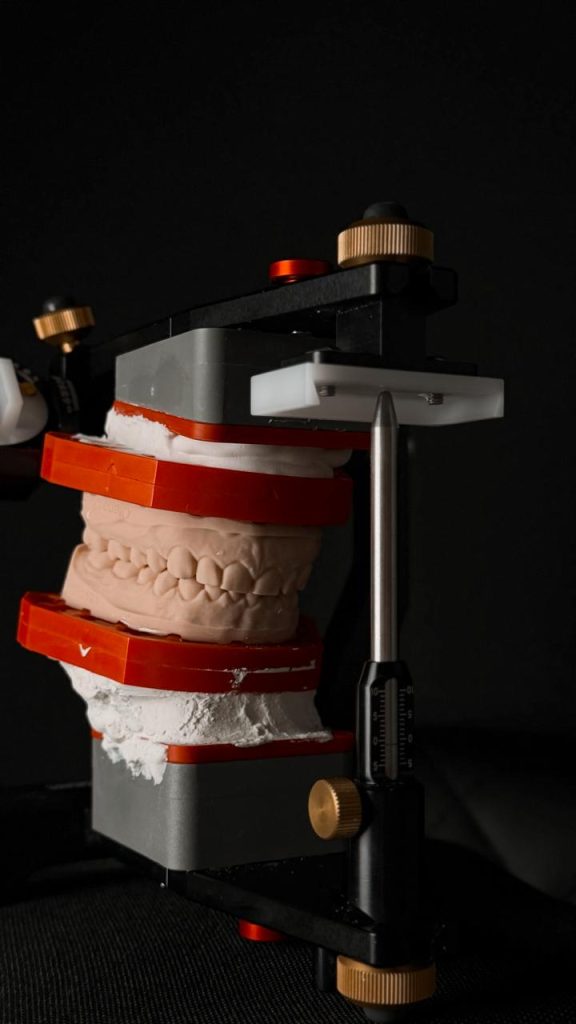
The jaw is part of a complex functional cycle
If we simply treat “on the fly”, we risk:
– Axiography, articulator analysis, facebow, functional testing
– Simulation in the articulator before the actual treatment
– Structure according to functional position (splint, dentures, orthodontics, interdisciplinary)
Planning according to Slavicek means: We only intervene when we know for sure what we are doing – and why.
This isn't extra work. This is sustainable dentistry.
Whether it’s dentures, orthodontics or braces – if the plan is right, the result will be right.
Many patients associate the word "brace" with a simple plastic night guard—often transparent, worn at night to "prevent clenching." But in Slavicek's method, a brace is much more than protection—it's a therapeutic tool.
In functional dentistry, the splint not only serves to protect, but above all to:
| Standard rail | Functional splint according to Slavicek |
| Only protection against abrasion | Moves the lower jaw into the test position |
| Usually without functional testing | Based on axiography & functional diagnostics |
| A position for everyone | Individually adapted & adjustable |
| Symptom-oriented | Cause-oriented |
A functional splint is not a temporary solution – it is a diagnostic tool, test phase and therapy all in one.
If your splint doesn’t change anything – then perhaps the functional plan behind it is missing.
In functional dentistry according to Slavicek, a central principle applies: You can only support – and change – what you understand.
That is why it is important for us as practitioners not only to make the diagnosis, but also to explain it in an understandable and comprehensible way.
Because:
A jaw joint does not simply crack “on its own”.
Teeth grinding is not just because “everyday life is stressful”.
And an incorrect bite is not without consequences – for the entire body.
The craniomandibular system (jaw, joints, muscles, tongue) is:
If something gets out of balance here, symptoms can occur that often do not start directly in the mouth, e.g.:
In the Slavicek method we take the time to:
You are not a "passive treatment object." Rather, you are part of a collaborative process that only works if you understand what's happening in your system.
In our practice, we don't just speak Latin—we speak it in a way that makes sense. And that's the first step toward real change.


